
Choosing an Intercom System for Flats
A front door that anyone can buzz is rarely just a minor inconvenience. In a block of flats, it affects security, privacy, parcel deliveries, resident confidence and day-to-day management. The right intercom system for flats helps control who gets in, who does not, and how easily residents can respond when someone calls.
That sounds straightforward, but flat intercoms are rarely one-size-fits-all. A converted house split into three flats has very different needs from a purpose-built block with multiple entrances, gates, trades access and managing agent oversight. The best results come from matching the system to the building, the users and the level of control required.
Why an intercom system for flats matters
In shared residential buildings, the entrance is a weak point unless access is managed properly. A basic doorbell may tell residents someone is outside, but it does not provide any real control or visibility. An intercom gives residents a way to speak to visitors before granting access, and in many setups, to see them as well.
That brings practical benefits straight away. Residents can verify deliveries, allow access to expected visitors and reduce the chance of tailgating or unwanted callers entering the building. For landlords and managing agents, it also helps create a more secure and professionally managed property.
There is also a reliability factor that often gets overlooked. Older systems in blocks of flats can become a source of daily frustration - unclear audio, faulty handsets, intermittent door release and poor call routing. Replacing or upgrading the intercom is not just about new features. Quite often, it is about restoring confidence that the entrance system will work every time.
The main types of flat intercom system
The right choice depends on the size of the building, the cabling available and the level of functionality residents expect.
Audio intercoms
An audio-only system is the simplest option. Visitors call the flat, the resident answers through an internal handset, and the door can be released remotely if needed. This can work well in smaller buildings where budgets are tighter and residents mainly want dependable access control rather than visual verification.
The trade-off is obvious. If you cannot see the visitor, you rely on voice alone. In some buildings that is perfectly acceptable. In others, especially where there is frequent delivery traffic or a higher concern about unauthorised access, video is often the better fit.
Video intercoms
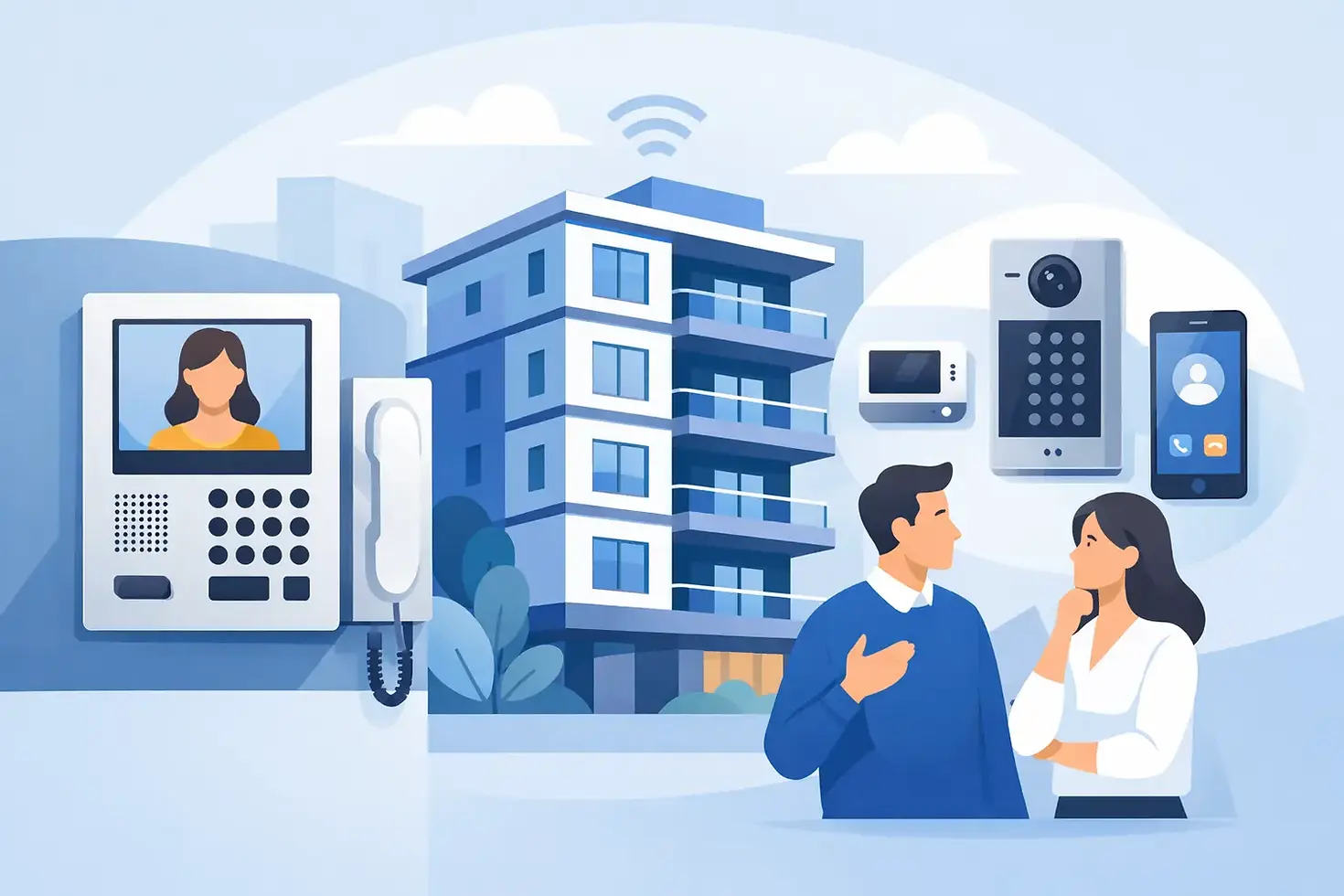
A video intercom system for flats adds a camera at the entrance and a screen in each flat, or in some cases app-based viewing on a smartphone. This gives residents an immediate visual check before opening the door.
For many blocks, video now feels like the sensible standard rather than a premium extra. It improves confidence, especially for vulnerable residents, and it is useful where callers may be unknown to the occupant. Image quality, low-light performance and screen usability all matter here. A poorly specified video system can become frustrating just as quickly as an old audio unit.
GSM and app-based systems
Some intercoms route calls to residents’ mobile phones rather than fixed handsets. That can be attractive where residents are often out, where installing internal handsets is impractical, or where flexibility is a priority.
This approach can work very well, but it depends on mobile signal, call handling and clear management of user permissions. It is convenient, though not always the right answer for every resident demographic. In blocks with mixed occupants, some may prefer a traditional in-flat device while others want mobile access. A good system design takes that into account.
What to consider before you choose
A well-designed intercom starts with the building itself, not the brochure.
The number of flats is the first obvious factor, but it is not the only one. You also need to think about how many entrances need to be controlled, whether there is a main gate as well as a communal door, whether trades or parcel couriers need managed access, and whether the property has concierge or caretaker involvement.
Existing infrastructure is also important. In some buildings, current cabling can be reused. In others, ageing wiring is part of the problem and should not be carried into a new installation. This is where a proper site survey matters. It avoids specifying a system that looks cost-effective on paper but becomes more disruptive or expensive once installation begins.
Resident experience should not be treated as an afterthought. Handsets or monitors need to be easy to use, entrance panels need to be durable and clearly labelled, and audio quality needs to remain consistent even in busy or exposed locations. If a system feels awkward, people stop trusting it.
Security features that make a real difference
Not every feature is worth paying extra for, but some have a clear day-to-day benefit.
A door entry panel with clear call buttons or a digital directory helps visitors reach the right flat quickly. Remote release is standard, but timed access permissions, fob or keypad entry and audit capability can also be valuable, especially in larger blocks or managed developments.
Video recording may be worth considering where there are repeated access issues or concerns about nuisance callers. It is not essential in every property, and any recording setup needs to be handled properly with privacy and compliance in mind, but in the right environment it adds useful accountability.
Durability is another major point. External entry panels need to stand up to weather, regular use and occasional misuse. A smart-looking system is not enough. It needs to be built for the realities of a communal entrance.
Intercom upgrades versus full replacement
Many property owners start by asking whether an existing system can simply be repaired. Sometimes it can. If the core infrastructure is sound and the faults are isolated, targeted repairs or component replacements may extend the system’s life.
There are limits, though. If parts are obsolete, call quality is poor throughout the building or residents are dealing with repeated failures, a full replacement is often the more sensible long-term decision. Continuing to patch an unreliable system can cost more over time and still leave residents dissatisfied.
Upgrades can also be a middle ground. For example, a building may move from audio to video using parts of the existing layout, or replace communal panels and internal devices while retaining some cabling. The right route depends on the condition of the current setup and what the building needs over the next few years, not just the next few months.
Installation quality matters as much as the equipment
An intercom is only as good as its design, installation and aftercare. Poor cable routing, badly positioned panels, weak door release hardware or rushed commissioning can undermine even a high-quality system.
That is why tailored installation matters. A good installer will assess usage patterns, identify practical risks, recommend suitable equipment and make sure the door entry system works properly with locks, access control points and any wider security measures already in place.
For blocks of flats, ongoing support is just as important. Communal systems need maintenance, occasional adjustments and a clear route for fault reporting. When residents rely on the system every day, delays in resolving issues quickly become a building-wide problem.
Is a smart intercom always the best option?
Not necessarily. Smart features can be very useful, particularly app access, remote answering and user management. But smart does not automatically mean better.
In some buildings, a straightforward wired video intercom will be more reliable and easier for all residents to use. In others, mobile-based access gives the flexibility people want. The best choice depends on who lives there, how the building is managed and how much complexity is genuinely helpful.
This is where honest advice matters. A system should solve access and security problems, not introduce new frustrations in the name of modernisation.
Choosing the right partner for a flats intercom project
If you are planning an intercom system for flats, look for a provider that can do more than supply hardware. You need proper assessment, a system designed around the property, compliant installation standards and dependable support once the job is complete.
That is particularly important where intercoms connect with door entry, access control or wider building security. A coordinated approach usually delivers a cleaner result than treating each part separately. For property owners and managers across Sussex and Kent, that often means working with a specialist who understands both residential security and the practical demands of shared buildings.
The best intercom system is not the one with the longest feature list. It is the one residents use confidently, managers can rely on and visitors can navigate without confusion. Get that right, and the entrance stops being a weak point and starts doing its job properly.


Comments